
Your test results are back. Now what?
For many people, this is the moment confusion begins. You may have numbers, abbreviations, ranges, arrows, and comments—but no real sense of what any of it means in everyday life. One result looks low. Another looks “normal.” A third is close to the edge of the range. Should you worry? Ignore it? Retest? Change your diet? Ask for more testing?
This confusion is common, and it is one reason so many people end up depending on random internet advice, fragmented social media content, or generalized recommendations that do not really apply to them.
A better approach starts with understanding what health markers are, what they can tell you, and how to think about results in a calm, practical way.This article is a beginner’s guide to interpreting health markers so you can move from confusion to clarity.
Why Health Markers Matter
Health markers are measurable indicators that help describe what is happening inside your body. They do not tell the entire story on their own, but they can provide useful clues about your current internal state.
That matters because how you feel is only one part of the picture.
A person may feel tired, foggy, run-down, irritable, sluggish, or “off” for months before understanding what may be contributing to those symptoms. In some cases, internal markers can point toward nutritional gaps, metabolic patterns, recovery issues, or general imbalance long before someone knows exactly what to pay attention to.
This is why testing can be valuable. It moves the conversation from:
- “I think something is wrong”
to:
- “These are the markers I should understand more clearly.”
The goal is not fear. It is informed action.
Common Health Markers Explained
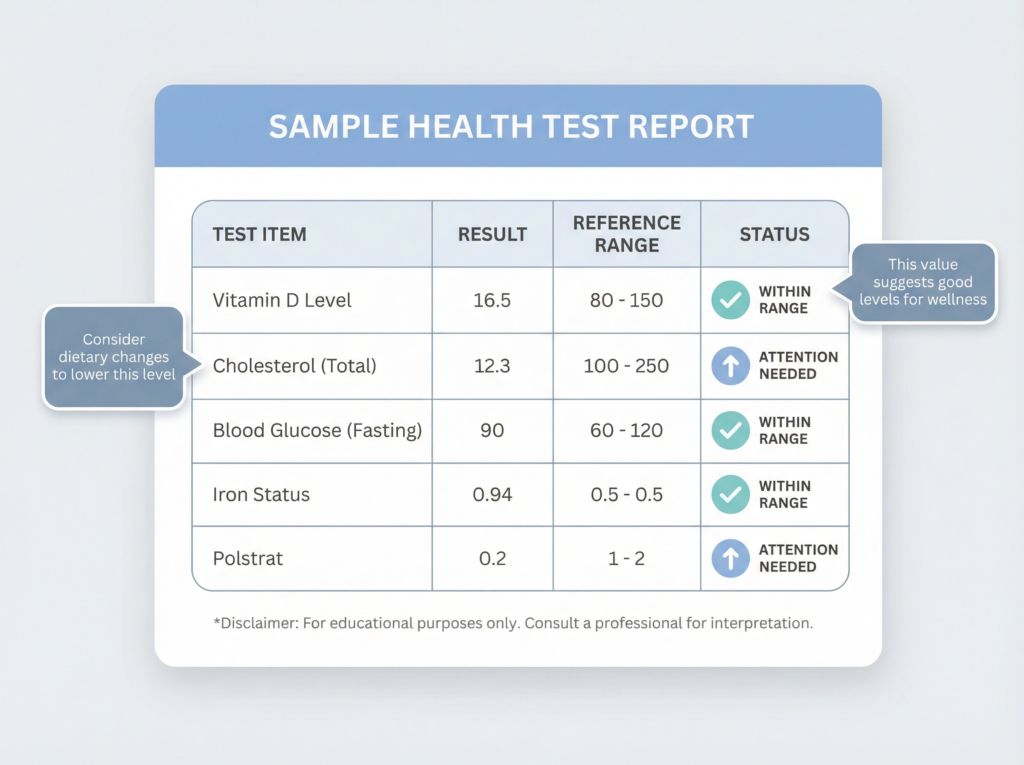
Different tests look at different systems. You do not need to memorize everything, but it helps to understand the categories.
Blood sugar and glucose-related markers
These markers help show how your body handles sugar and energy.
When blood sugar is unstable, people often notice symptoms like fatigue and energy crashes before they understand what may be driving them.
They can provide clues about:
- short-term blood sugar levels
- longer-term glucose control
- possible insulin resistance or metabolic stress
- whether your energy crashes may be connected to blood sugar instability
Cholesterol and lipid markers
These help describe aspects of cardiovascular and metabolic health.
People often focus only on whether cholesterol is “high” or “low,” but the more useful question is what the overall pattern suggests and how it fits with lifestyle, family history, systemic stress, nutrition, and general health goals.
Hemoglobin and iron-related markers
These are especially relevant when fatigue, weakness, low stamina, or breathlessness are present.
Low hemoglobin or poor iron status can affect oxygen delivery and leave people feeling tired even when they are trying to rest and eat well.
Vitamin and nutrient markers
These may include markers related to:
- vitamin D
- vitamin B12
- folate
- iron stores
- other nutrients depending on the test and context
Low nutrient markers can affect energy, mood, recovery, concentration, and physical performance.
Hormonal and metabolic balance markers
Hormonal and metabolic markers can be relevant when someone experiences ongoing fatigue, low mood, sluggishness, or poor concentration. These systems influence how the body produces and uses energy, which means that when internal balance is off, the effects can show up in quiet, gradual ways that are easy to overlook. Looking at these markers in context, alongside other results and symptoms, can give a more complete picture of what may need support.
Cellular Stress and Recovery markers
Some tests may give clues about systemic stress or recovery patterns within the body. These are usually interpreted in context rather than in isolation.
Normal Ranges vs. Optimal Function
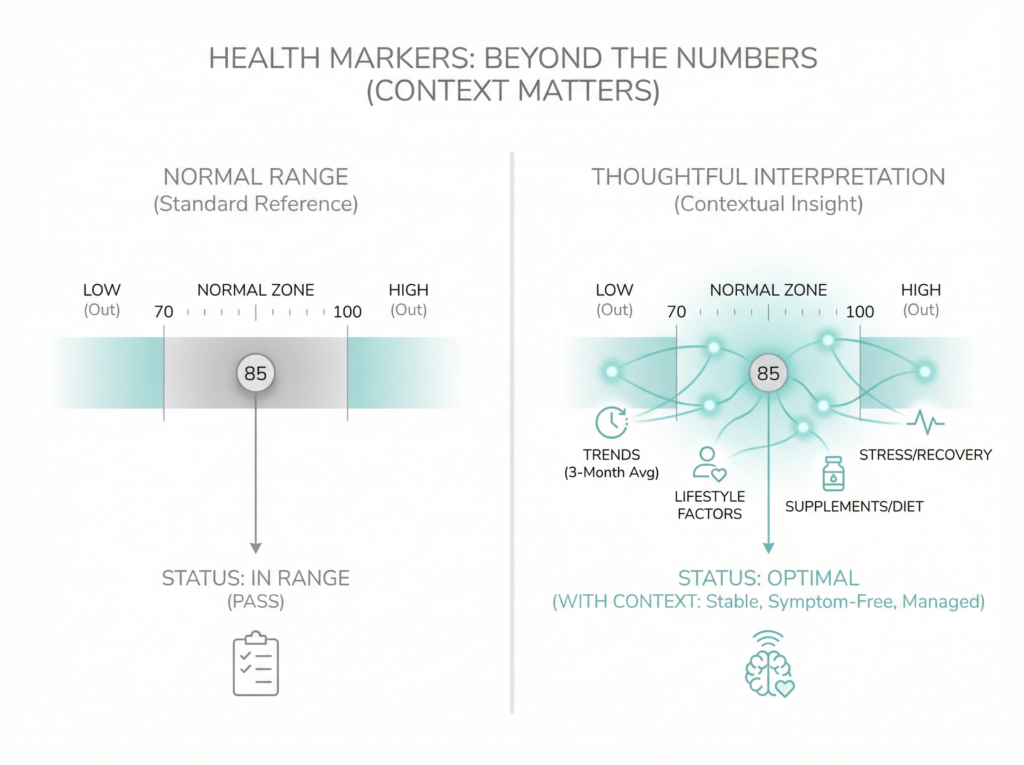
One of the biggest sources of confusion is the word normal.
A result can fall inside a standard reference range and still leave a person wondering why they do not feel well. On the other hand, a result slightly outside a range does not always mean something dangerous is happening.
That is why interpretation requires context.
A range is not the whole story
Reference ranges are general tools. They help identify values that are common in a large population, but they are not the same as a personalized wellness interpretation.
What matters includes:
- the full pattern of results
- whether symptoms match the marker pattern
- whether multiple markers point in the same direction
- how long a pattern has been present
- whether your lifestyle or nutrition may be influencing the result
Think in patterns, not isolated numbers
A single number rarely explains everything.
For example:
- low energy plus low B12 may be more meaningful than low B12 alone
- poor recovery plus low vitamin D may tell a clearer story than either one by itself
- fatigue plus low hemoglobin plus low iron stores is a different picture than a single borderline result
Interpreting your results well means asking:
- what does this marker suggest?
- how does it connect to my symptoms?
- what else should be looked at alongside it?
When to Worry and When Not to Panic
Many people make one of two mistakes when reading health results:
- they panic too quickly
- they ignore everything completely
A better approach is somewhere in the middle.
Do not panic over one unfamiliar result
A result may appear unusual for many reasons, including timing, hydration, recent illness, stress, sleep disruption, lab variation, or the need to interpret it alongside other markers.
But do not dismiss persistent patterns
If a marker is clearly low, clearly high, or repeatedly abnormal—and it matches how you feel—it deserves attention. The same is true when several results together suggest the same underlying issue.
Ask better questions
When reviewing your results, ask:
- what system does this marker relate to?
- is this likely connected to how I feel?
- what should be interpreted together with it?
- do I need follow-up with a healthcare professional?
- what lifestyle or nutrition factors could be relevant?
These questions are more useful than simply asking whether a result is “bad.”
A Beginner’s Way to Interpret Results Step by Step
If you are looking at a report and feeling overwhelmed, here is a simple way to approach it.
Step 1: Start with your symptoms
Think about what you are actually experiencing.
Examples:
- low energy
- brain fog
- poor sleep
- slow recovery
- mood changes
- digestive discomfort
- cravings
- persistent low stamina
Your symptoms do not replace professional testing, but they help you interpret whether a result is relevant to how you actually feel.
Step 2: Group your markers by category
Instead of looking at random values one by one, group them by area:
- energy-related
- metabolic
- cardiovascular
- nutrient-related
- hormonal or metabolic imbalance-related
- cellular balance-related
This makes the report easier to understand.
Step 3: Look for patterns
Do several values point in the same direction?
For example:
- fatigue + low iron markers
- sluggishness + signs of hormonal or metabolic imbalance
- low mood + low vitamin D or B12
- post-meal crashes + glucose-related issues
Patterns are often more meaningful than isolated numbers.
Step 4: Compare symptoms with markers
Not every low or high result explains what you are feeling. But when results and symptoms line up, that gives you a more useful starting point.
Step 5: Decide what the next step should be
That may include:
- follow-up with a qualified healthcare professional
- more testing
- retesting after a period of lifestyle change
- changes to nutrition, sleep, stress management, or recovery habits
Why Interpretation Matters More Than Guessing
Many wellness decisions are made without enough information.
People often start supplements, diets, routines, or “detox” plans based on symptoms alone. That can feel proactive, but it is not always efficient.
If you do not understand your internal markers, it is easy to:
- focus on the wrong issue
- miss something important
- overreact to one result
- underreact to a clear pattern
- spend time and money on solutions that do not fit your situation
A more informed approach starts with interpretation.
Testing is valuable because it gives you something concrete to work with. Interpretation is what makes that information useful.
The Role of Internal Balance
This is where internal balance becomes important.
Internal balance refers to how well key systems and markers are functioning together. It is not about perfection. It is about whether the internal conditions that support energy, recovery, metabolism, and resilience are where they should be.
When your results show imbalances, that does not automatically mean something is seriously wrong. But it may mean your body needs more support than symptoms alone are revealing.
That is why testing-based wellness can be more helpful than generalized advice. It helps you personalize your next step.
What to Do After You Get Your Results
Once you understand your results better, the goal is not to become obsessed with numbers. The goal is to use them wisely.
Practical next steps may include:
- asking informed follow-up questions
- discussing concerning results with a qualified healthcare provider
- improving nutrition quality
- reviewing sleep, stress, and recovery habits
- considering whether additional testing would be useful
- retesting after a period of targeted changes
In many cases, the best next step is not a dramatic reset. It is a more precise one.
A Better Relationship With Your Health Data
If you have ever looked at a test result and felt more confused than informed, you are not alone.
The good news is that interpretation gets easier when you stop expecting one number to explain everything and start looking at the bigger picture. Health markers are not there to make you anxious. They are there to help you understand what may need attention.
A test-based approach does not remove uncertainty completely, but it gives you a more grounded starting point than guessing.
If you want a clearer picture of what your internal health markers may be saying, the most useful next step is to begin with a structured self-check and a more informed framework.
Ready to stop feeling confused by your test results? Take the BalanceTest and get a clear, personalized picture of your internal health.
Disclaimer: This content is for educational and informational purposes only and is not intended as medical advice. This product is not intended to diagnose, treat, cure, or prevent any disease. Always consult your doctor or a qualified healthcare professional before making any health decisions or starting new health regimens.
Disclosure: I am an Independent Partner of Zinzino. This site is educational in nature and not endorsed by or affiliated with Zinzino.