
The #4 most Googled health question in India is: “Why am I so tired?”
That question matters because tiredness is easy to normalize. People blame work stress, poor sleep, long commutes, heat, lack of exercise, or simply “getting older.” Sometimes those factors do play a role. But often, fatigue is not only about lifestyle. It is also about what is happening inside your body.
When your internal health markers are off, energy is often one of the first things to suffer. Low vitamin levels, iron deficiency, hormonal and metabolic imbalance, blood sugar imbalances, ongoing stress, and poor recovery can all show up as the same everyday complaint: I feel tired all the time.
That is why fatigue can be so frustrating. The symptom is common, but the cause is not always obvious.
This article explains why fatigue is so common, why it affects so many people in India, how internal balance influences energy, and what kind of testing can help you stop guessing and start understanding what your body may need.
Why Fatigue Is So Common in India
Fatigue is not rare. For many people, it feels like a normal part of modern life. But in India, several factors can make ongoing low energy even more common.
High-stress work culture and long hours
Many professionals work long days, spend significant time commuting, and stay connected to work even after office hours. This creates a constant background of stress and limited recovery. You may still be functioning, but your body is spending more and more time operating in a depleted state.
Nutritional gaps in everyday diets
A person can eat enough food and still miss important nutrients. Energy depends on more than calories. It also depends on having the right levels of key vitamins, minerals, fatty acids, and metabolic support. When the diet lacks variety, protein balance, or certain nutrient-dense foods, fatigue can become more likely.
Heat, hydration, and recovery demands
In many parts of India, hot weather, humidity, and dehydration can quietly affect energy levels. Even mild under-hydration can reduce mental clarity, physical stamina, and concentration. Combined with busy schedules, this can create a baseline feeling of heaviness or exhaustion.
Sleep disruption from urban life
Many people are sleeping, but not necessarily sleeping well. Noise, light exposure, stress, late meals, screen use, and irregular schedules can all reduce sleep quality. Poor sleep does not just make you feel tired the next day. Over time, it also affects stress hormones, blood sugar regulation, mood, and recovery.
High prevalence of deficiency-related fatigue
There are also India-specific health patterns worth paying attention to. Vitamin D deficiency is widely discussed in India despite abundant sunlight, often due to indoor lifestyles, pollution, clothing coverage, and limited sun exposure habits. Iron deficiency and anemia are also common, especially among women. Vitamin B12 insufficiency may be more common in people who eat little or no animal food. Hormonal balance support is also frequently discussed in fatigue conversations.
In other words, many people are not imagining their low energy. They may be feeling the effects of real internal imbalances.
Common Causes of Low Energy Levels
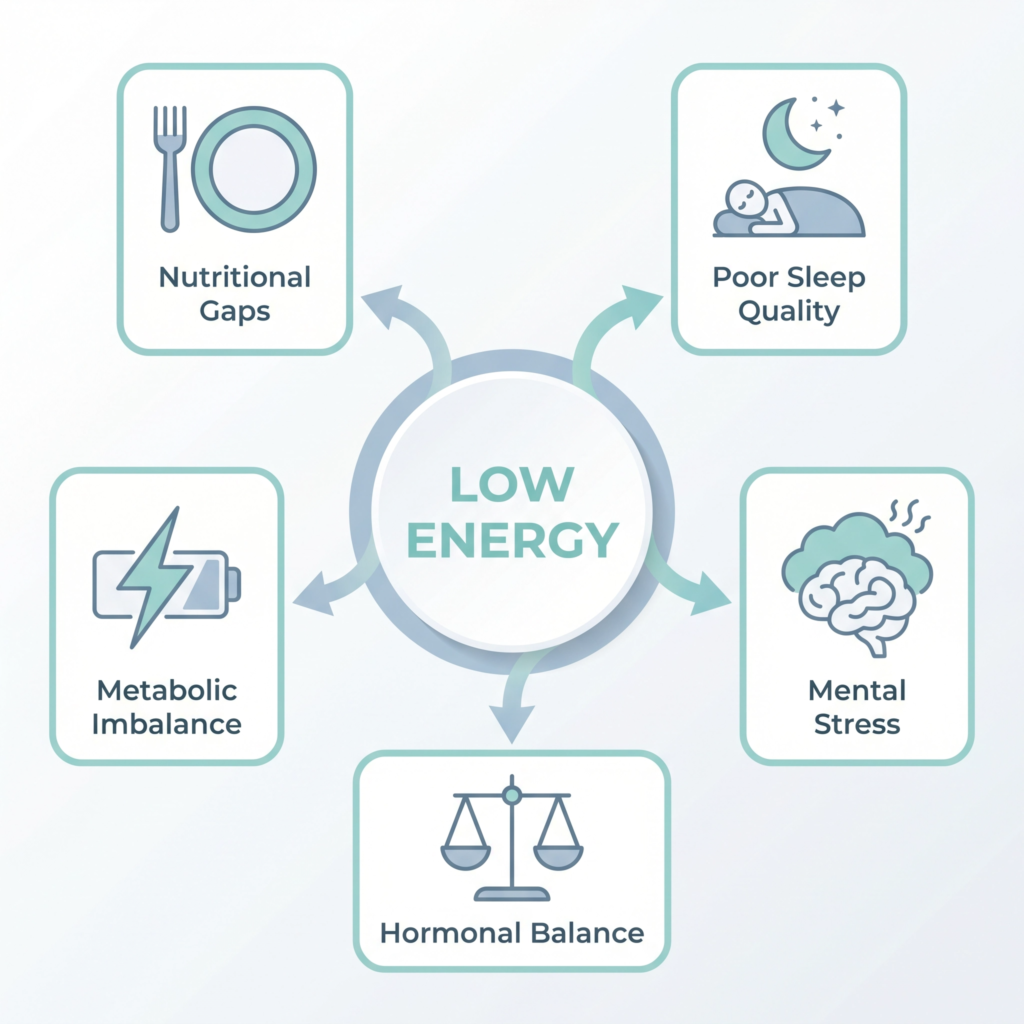
Fatigue is not a diagnosis. It is a signal. The challenge is that many different internal issues can create the same signal.
1. Vitamin and mineral deficiencies
Some of the most common deficiency-related contributors to fatigue include:
- Vitamin B12 — important for red blood cell formation, nerve function, and energy production.
- Vitamin D — associated with immune health, muscle function, and overall vitality.
- Iron — essential for oxygen transport in the body. Low iron can leave you feeling weak, breathless, or drained.
- Magnesium — involved in muscle, nerve, sleep, and energy function.
If these are low, your body may struggle to produce and use energy efficiently. That can feel like brain fog, exhaustion, low motivation, poor exercise recovery, or an unexplained sense that something is off.
2. Hormonal and metabolic balance
Hormonal and metabolic systems play an important role in how energized you feel day to day. When these internal systems are not well supported, energy levels, mental clarity, and overall vitality can all be affected. Because these systems influence so many functions at once, even a gradual shift in internal balance can show up as persistent low energy that is difficult to trace back to a single cause.
3. Sleep quality problems
A person may spend enough hours in bed and still wake up tired. Poor sleep quality can happen because of stress, blood sugar swings, late caffeine, heavy meals, inconsistent schedules, or sleep-related breathing issues.
When sleep quality is poor, the body cannot fully recover. Energy stays low, mood becomes more fragile, and concentration often drops.
4. Stress and burnout
Ongoing stress changes more than mood. It can affect appetite, digestion, nutrient use, sleep, recovery, and blood sugar regulation. Some people feel “wired but tired.” Others feel flat, depleted, and mentally drained.
When stress becomes sustained, fatigue is often part of the picture.
5. Metabolic imbalances
Blood sugar instability, insulin resistance, and poor meal composition can also contribute to low energy. If energy crashes in the afternoon, if you feel shaky or sleepy after meals, or if you rely on caffeine and sugar to keep going, blood sugar regulation may be worth paying attention to.
The Internal Balance Connection
This is where the conversation becomes more useful.
Many people think of energy as an external issue: sleep more, work less, drink more coffee, go on a vacation. Those things may help to some degree, but they do not always explain why the problem keeps returning.
Internal balance means your body has the right internal conditions to function well. That includes having adequate nutrient levels, healthy metabolic function, good recovery signals, and balanced physiological systems.
When these internal markers are out of balance, your body often tells you through symptoms like:
- tiredness
- brain fog
- poor motivation
- heavy or unrefreshing mornings
- low exercise tolerance
- energy crashes
- slow recovery
Key internal markers that may affect energy
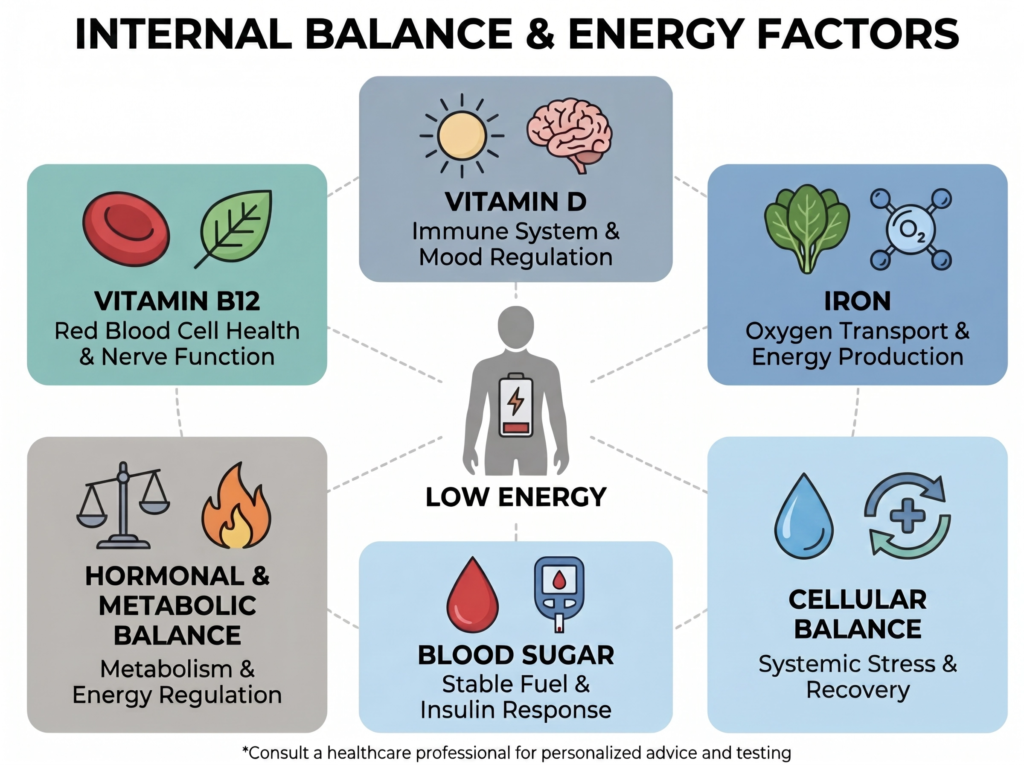
Several internal markers are especially relevant to fatigue:
- B12
- Vitamin D
- Iron / ferritin / hemoglobin
- Hormonal and metabolic balance markers
- Blood sugar / glucose-related markers
- Cellular balance markers
- Fatty acid balance and overall nutrient status
These markers do not work in isolation. Your body is a system. One low value can affect multiple functions, and several minor imbalances together can leave you feeling far worse than any one result would suggest.
For example, if your B12 is low, you may feel tired no matter how much you sleep. If iron is low, your body may struggle to carry oxygen effectively. If hormonal and metabolic balance is off, your metabolic pace can slow down. If blood sugar swings are common, your energy may feel unstable all day.
That is why the idea of internal balance matters. It shifts the question from:
“How do I force myself to have more energy?”
to:
“What is happening inside my body that may be affecting my energy?”
That is a much better place to begin.
Testing Your Internal Health
If you feel tired all the time, testing can help you move from guessing to understanding.
What kinds of tests may be useful?
Depending on your situation and your healthcare provider’s guidance, people often look at tests such as:
- iron-related markers
- vitamin B12
- vitamin D
- metabolic and hormonal markers
- fasting glucose or related metabolic markers
- other nutrient or health markers depending on symptoms
Why generic advice is often not enough
When people are tired, they often hear the same advice:
- sleep more
- reduce stress
- eat healthier
- move your body
- drink more water
Those are all reasonable ideas. But they are not always enough, because they are broad recommendations rather than personalized insight.
If your fatigue is being driven by low vitamin D, B12 insufficiency, hormonal or metabolic imbalance, anemia, or blood sugar instability, generic advice may not solve the underlying issue.
Why interpretation matters too
Testing alone is not enough. The next step is understanding what your results mean and how they connect to symptoms, habits, and next steps. That is where people often feel lost.
If you want to interpret your results more confidently, it helps to understand how common health markers connect to symptoms and next steps.
A more informed, test-based approach helps you make decisions based on your actual internal picture, not just on trends, guesses, or generalized internet advice.
Solutions and Next Steps
Once you know more about what may be contributing to your fatigue, you can start making more targeted decisions.
1. Improve nutrition quality
Focus on meals that support stable energy and nutrient intake:
- include protein consistently
- build meals around whole foods where possible
- include iron-rich foods, B12 sources if appropriate, and foods that support general nutrient density
- watch whether highly refined meals leave you feeling sleepy or unstable afterward
2. Support sleep quality
Better sleep is not only about duration. It is also about consistency and recovery.
Helpful habits may include:
- regular sleep and wake times
- reduced screen exposure late at night
- lighter evening meals
- managing stress before bed
- avoiding caffeine too late in the day
3. Address stress realistically
If stress is chronically high, energy often suffers. That does not mean you need a perfect life to feel better, but it does mean your recovery habits matter.
Useful support may include:
- boundaries around work
- regular movement
- breathing practices or relaxation techniques
- short recovery breaks during the day
- better sleep and hydration support
4. Consider targeted support based on results
The more specific your insight, the more useful your next step can be. If a marker is low or a pattern is clear, the response can become more intentional rather than random.
5. Track change over time
If you improve diet, recovery, sleep, supplementation, or general health habits, progress should be tracked. Energy can improve gradually. Retesting and comparing symptoms over time helps you see whether the changes you made are actually working.
When to Take Fatigue Seriously
Everyone feels tired sometimes. But if fatigue is persistent, worsening, or interfering with your daily life, it deserves attention.
A deeper look may be especially useful if you:
- wake up tired even after a full night of sleep
- crash every afternoon
- rely heavily on caffeine to function
- feel mentally foggy or unmotivated most days
- recover slowly from exercise or normal daily activity
- suspect a deficiency but have never tested it
- feel like something is off but cannot explain why
The goal is not to become fearful. It is to become more informed.
A Better Starting Point Than Guesswork
If you have been asking, “Why am I always tired?” the answer may not be simple, but it is often more measurable than people think.
Fatigue is not always about laziness, lack of discipline, or poor time management. Sometimes it is a sign that your internal health needs more attention.
That is why a test-based approach matters. When you understand what is happening inside your body, you can make better decisions about what to improve, what to monitor, and what to stop guessing about.
If your energy has felt off for a while, the most useful next step may be to start with a clearer picture.
Ready to stop guessing and start understanding? Take the BalanceTest to assess your internal balance and get personalized insights.
Disclaimer: This content is for educational and informational purposes only and is not intended as medical advice. This product is not intended to diagnose, treat, cure, or prevent any disease. Always consult your doctor or a qualified healthcare professional before making any health decisions or starting new health regimens.
Disclosure: I am an Independent Partner of Zinzino. This site is educational in nature and not endorsed by or affiliated with Zinzino.