Category: Wellness Education

Educational articles about internal health, testing, wellness habits, and informed next steps for better long-term well-being.

  • Why You’re Always Tired: The Internal Balance Connection

    Woman sitting at a desk looking drained but positive while working on a laptop
    Fatigue can feel normal in busy life, but ongoing low energy may also reflect internal imbalances.

    The #4 most Googled health question in India is: “Why am I so tired?”

    That question matters because tiredness is easy to normalize. People blame work stress, poor sleep, long commutes, heat, lack of exercise, or simply “getting older.” Sometimes those factors do play a role. But often, fatigue is not only about lifestyle. It is also about what is happening inside your body.

    When your internal health markers are off, energy is often one of the first things to suffer. Low vitamin levels, iron deficiency, hormonal and metabolic imbalance, blood sugar imbalances, ongoing stress, and poor recovery can all show up as the same everyday complaint: I feel tired all the time.

    That is why fatigue can be so frustrating. The symptom is common, but the cause is not always obvious.

    This article explains why fatigue is so common, why it affects so many people in India, how internal balance influences energy, and what kind of testing can help you stop guessing and start understanding what your body may need.

    Why Fatigue Is So Common in India

    Fatigue is not rare. For many people, it feels like a normal part of modern life. But in India, several factors can make ongoing low energy even more common.

    High-stress work culture and long hours

    Many professionals work long days, spend significant time commuting, and stay connected to work even after office hours. This creates a constant background of stress and limited recovery. You may still be functioning, but your body is spending more and more time operating in a depleted state.

    Nutritional gaps in everyday diets

    A person can eat enough food and still miss important nutrients. Energy depends on more than calories. It also depends on having the right levels of key vitamins, minerals, fatty acids, and metabolic support. When the diet lacks variety, protein balance, or certain nutrient-dense foods, fatigue can become more likely.

    Heat, hydration, and recovery demands

    In many parts of India, hot weather, humidity, and dehydration can quietly affect energy levels. Even mild under-hydration can reduce mental clarity, physical stamina, and concentration. Combined with busy schedules, this can create a baseline feeling of heaviness or exhaustion.

    Sleep disruption from urban life

    Many people are sleeping, but not necessarily sleeping well. Noise, light exposure, stress, late meals, screen use, and irregular schedules can all reduce sleep quality. Poor sleep does not just make you feel tired the next day. Over time, it also affects stress hormones, blood sugar regulation, mood, and recovery.

    High prevalence of deficiency-related fatigue

    There are also India-specific health patterns worth paying attention to. Vitamin D deficiency is widely discussed in India despite abundant sunlight, often due to indoor lifestyles, pollution, clothing coverage, and limited sun exposure habits. Iron deficiency and anemia are also common, especially among women. Vitamin B12 insufficiency may be more common in people who eat little or no animal food. Hormonal balance support is also frequently discussed in fatigue conversations.

    In other words, many people are not imagining their low energy. They may be feeling the effects of real internal imbalances.

    Common Causes of Low Energy Levels
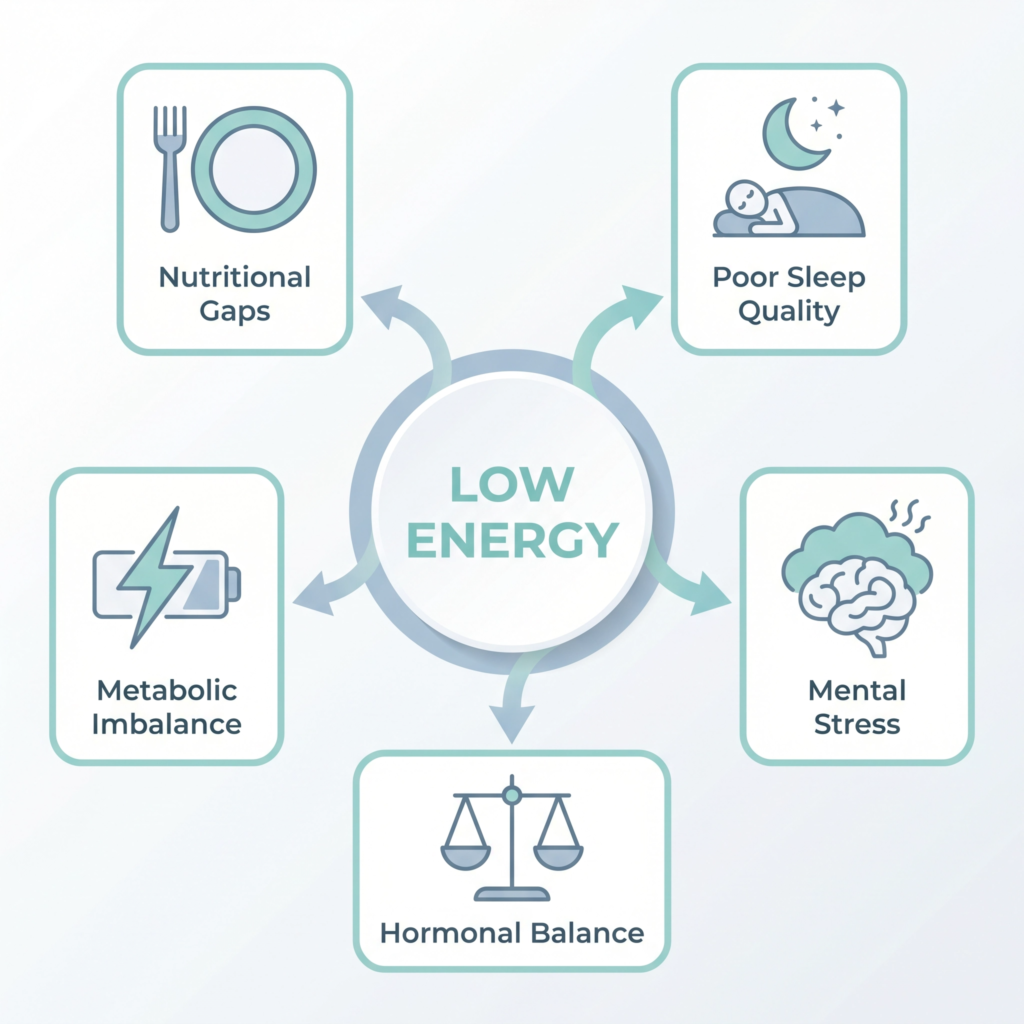
    Infographic showing common causes of sustained fatigue such as poor nutrition, sleep issues, stress, and hormonal imbalance
    Fatigue may be linked to more than one factor, including stress, sleep disruption, nutritional gaps, and hormonl-related issues.

    Fatigue is not a diagnosis. It is a signal. The challenge is that many different internal issues can create the same signal.

    1. Vitamin and mineral deficiencies

    Some of the most common deficiency-related contributors to fatigue include:

    • Vitamin B12 — important for red blood cell formation, nerve function, and energy production.
    • Vitamin D — associated with immune health, muscle function, and overall vitality.
    • Iron — essential for oxygen transport in the body. Low iron can leave you feeling weak, breathless, or drained.
    • Magnesium — involved in muscle, nerve, sleep, and energy function.

    If these are low, your body may struggle to produce and use energy efficiently. That can feel like brain fog, exhaustion, low motivation, poor exercise recovery, or an unexplained sense that something is off.

    2. Hormonal and metabolic balance

    Hormonal and metabolic systems play an important role in how energized you feel day to day. When these internal systems are not well supported, energy levels, mental clarity, and overall vitality can all be affected. Because these systems influence so many functions at once, even a gradual shift in internal balance can show up as persistent low energy that is difficult to trace back to a single cause.

    3. Sleep quality problems

    A person may spend enough hours in bed and still wake up tired. Poor sleep quality can happen because of stress, blood sugar swings, late caffeine, heavy meals, inconsistent schedules, or sleep-related breathing issues.

    When sleep quality is poor, the body cannot fully recover. Energy stays low, mood becomes more fragile, and concentration often drops.

    4. Stress and burnout

    Ongoing stress changes more than mood. It can affect appetite, digestion, nutrient use, sleep, recovery, and blood sugar regulation. Some people feel “wired but tired.” Others feel flat, depleted, and mentally drained.

    When stress becomes sustained, fatigue is often part of the picture.

    5. Metabolic imbalances

    Blood sugar instability, insulin resistance, and poor meal composition can also contribute to low energy. If energy crashes in the afternoon, if you feel shaky or sleepy after meals, or if you rely on caffeine and sugar to keep going, blood sugar regulation may be worth paying attention to.

    The Internal Balance Connection

    This is where the conversation becomes more useful.

    Many people think of energy as an external issue: sleep more, work less, drink more coffee, go on a vacation. Those things may help to some degree, but they do not always explain why the problem keeps returning.

    Internal balance means your body has the right internal conditions to function well. That includes having adequate nutrient levels, healthy metabolic function, good recovery signals, and balanced physiological systems.

    When these internal markers are out of balance, your body often tells you through symptoms like:

    • tiredness
    • brain fog
    • poor motivation
    • heavy or unrefreshing mornings
    • low exercise tolerance
    • energy crashes
    • slow recovery

    Key internal markers that may affect energy
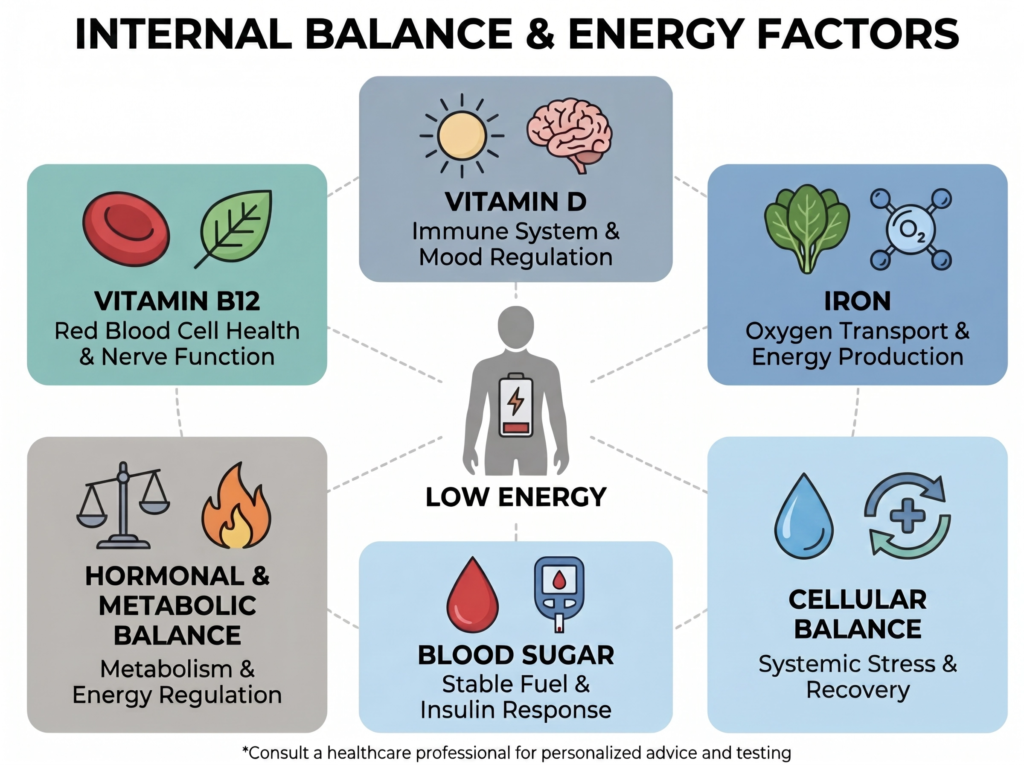
    Chart showing internal health markers linked to low energy including vitamin B12, vitamin D, iron, hormonal & metabolic markers, blood sugar, and inflammation
    Low energy can be influenced by several internal markers, not just one isolated issue.

    Several internal markers are especially relevant to fatigue:

    • B12
    • Vitamin D
    • Iron / ferritin / hemoglobin
    • Hormonal and metabolic balance markers
    • Blood sugar / glucose-related markers
    • Cellular balance markers
    • Fatty acid balance and overall nutrient status

    These markers do not work in isolation. Your body is a system. One low value can affect multiple functions, and several minor imbalances together can leave you feeling far worse than any one result would suggest.

    For example, if your B12 is low, you may feel tired no matter how much you sleep. If iron is low, your body may struggle to carry oxygen effectively. If hormonal and metabolic balance is off, your metabolic pace can slow down. If blood sugar swings are common, your energy may feel unstable all day.

    That is why the idea of internal balance matters. It shifts the question from:

    “How do I force myself to have more energy?”

    to:

    “What is happening inside my body that may be affecting my energy?”

    That is a much better place to begin.

    Testing Your Internal Health

    If you feel tired all the time, testing can help you move from guessing to understanding.

    What kinds of tests may be useful?

    Depending on your situation and your healthcare provider’s guidance, people often look at tests such as:

    • iron-related markers
    • vitamin B12
    • vitamin D
    • metabolic and hormonal markers
    • fasting glucose or related metabolic markers
    • other nutrient or health markers depending on symptoms

    Why generic advice is often not enough

    When people are tired, they often hear the same advice:

    • sleep more
    • reduce stress
    • eat healthier
    • move your body
    • drink more water

    Those are all reasonable ideas. But they are not always enough, because they are broad recommendations rather than personalized insight.

    If your fatigue is being driven by low vitamin D, B12 insufficiency, hormonal or metabolic imbalance, anemia, or blood sugar instability, generic advice may not solve the underlying issue.

    Why interpretation matters too

    Testing alone is not enough. The next step is understanding what your results mean and how they connect to symptoms, habits, and next steps. That is where people often feel lost.

    If you want to interpret your results more confidently, it helps to understand how common health markers connect to symptoms and next steps.

    A more informed, test-based approach helps you make decisions based on your actual internal picture, not just on trends, guesses, or generalized internet advice.

    Solutions and Next Steps

    Once you know more about what may be contributing to your fatigue, you can start making more targeted decisions.

    1. Improve nutrition quality

    Focus on meals that support stable energy and nutrient intake:

    • include protein consistently
    • build meals around whole foods where possible
    • include iron-rich foods, B12 sources if appropriate, and foods that support general nutrient density
    • watch whether highly refined meals leave you feeling sleepy or unstable afterward

    2. Support sleep quality

    Better sleep is not only about duration. It is also about consistency and recovery.

    Helpful habits may include:

    • regular sleep and wake times
    • reduced screen exposure late at night
    • lighter evening meals
    • managing stress before bed
    • avoiding caffeine too late in the day

    3. Address stress realistically

    If stress is chronically high, energy often suffers. That does not mean you need a perfect life to feel better, but it does mean your recovery habits matter.

    Useful support may include:

    • boundaries around work
    • regular movement
    • breathing practices or relaxation techniques
    • short recovery breaks during the day
    • better sleep and hydration support

    4. Consider targeted support based on results

    The more specific your insight, the more useful your next step can be. If a marker is low or a pattern is clear, the response can become more intentional rather than random.

    5. Track change over time

    If you improve diet, recovery, sleep, supplementation, or general health habits, progress should be tracked. Energy can improve gradually. Retesting and comparing symptoms over time helps you see whether the changes you made are actually working.

    When to Take Fatigue Seriously

    Everyone feels tired sometimes. But if fatigue is persistent, worsening, or interfering with your daily life, it deserves attention.

    A deeper look may be especially useful if you:

    • wake up tired even after a full night of sleep
    • crash every afternoon
    • rely heavily on caffeine to function
    • feel mentally foggy or unmotivated most days
    • recover slowly from exercise or normal daily activity
    • suspect a deficiency but have never tested it
    • feel like something is off but cannot explain why

    The goal is not to become fearful. It is to become more informed.

    A Better Starting Point Than Guesswork

    If you have been asking, “Why am I always tired?” the answer may not be simple, but it is often more measurable than people think.

    Fatigue is not always about laziness, lack of discipline, or poor time management. Sometimes it is a sign that your internal health needs more attention.

    That is why a test-based approach matters. When you understand what is happening inside your body, you can make better decisions about what to improve, what to monitor, and what to stop guessing about.

    If your energy has felt off for a while, the most useful next step may be to start with a clearer picture.

    Ready to stop guessing and start understanding? Take the BalanceTest to assess your internal balance and get personalized insights.

    Disclaimer: This content is for educational and informational purposes only and is not intended as medical advice. This product is not intended to diagnose, treat, cure, or prevent any disease. Always consult your doctor or a qualified healthcare professional before making any health decisions or starting new health regimens.

    Disclosure: I am an Independent Partner of Zinzino. This site is educational in nature and not endorsed by or affiliated with Zinzino.

  • The Omega-3 Deficiency Crisis in India: What You Need to Know

    Fish and plant-based foods that provide omega-3 arranged on a wooden table
    Omega-3 can come from both seafood and selected plant-based foods, but overall balance and intake still matter.

    Most Indians are deficient in omega-3—and many do not know it.

    That matters because omega-3 is not a trendy extra. It plays an important role in brain health, heart health, cellular balance, mood, and overall cellular function. When levels are low, the effects can be subtle at first: brain fog, poor focus, low mood, dry skin, slow recovery, or the feeling that your body is not functioning at its best.

    The challenge is that these symptoms are easy to overlook. People may blame stress, poor sleep, age, overwork, or a hectic lifestyle. But for many people in India, one overlooked piece of the puzzle is fatty acid balance—especially omega-3 status.This article explains why omega-3 deficiency is so relevant in India, why so many people may be at risk, what symptoms to watch for, and how a testing-first approach can help you make better decisions.

    Why Omega-3 Matters

    Omega-3 fatty acids help support many of the body’s core systems.

    They are involved in:

    • brain structure and function
    • heart and cardiovascular health
    • cellular balance support
    • cellular membrane health
    • mood regulation
    • eye health
    • recovery and resilience
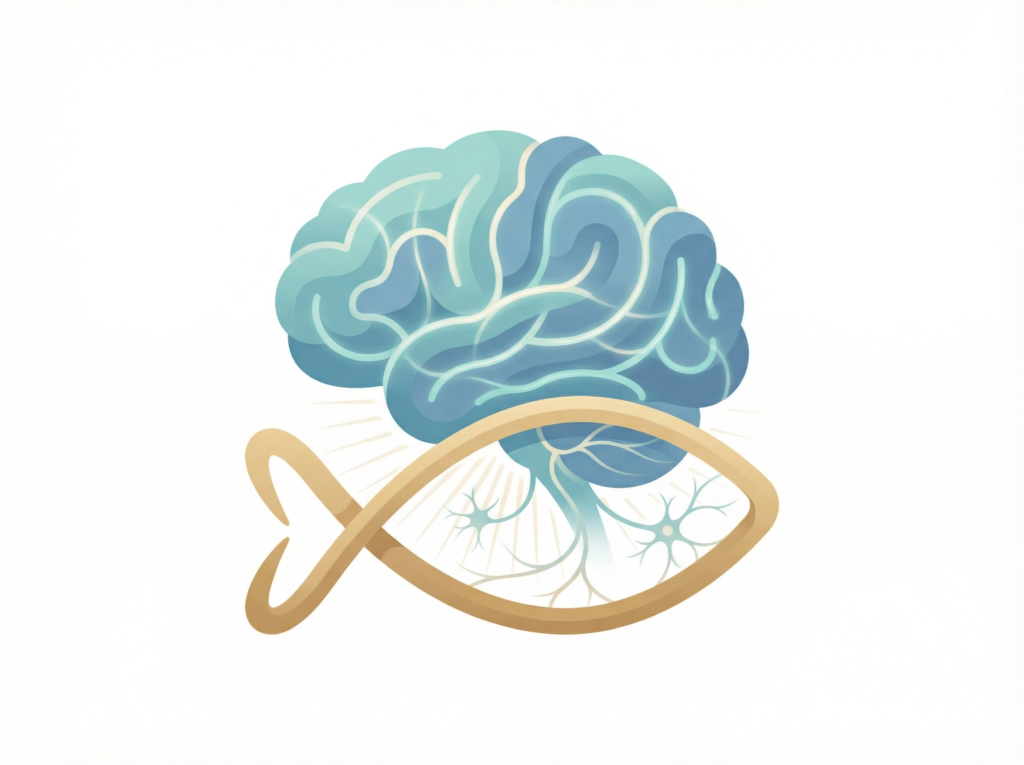
    Illustration showing the role of omega-3 in brain health
    Omega-3 plays an important role in brain structure, clarity, mood, and overall cognitive function.

    Because omega-3 is foundational rather than flashy, low levels can affect how you feel in gradual, quiet ways. People may not realize that ongoing brain fog, poor concentration, low mood, dry skin, or slow recovery may be connected to low omega-3 intake or poor fatty acid balance.

    Why Omega-3 Deficiency Is So Relevant in India

    India has several population-level patterns that can increase the risk of low omega-3 status.

    1. Low fish consumption in many diets

    Many Indians eat little or no fish, whether by choice, tradition, or geography. For people following vegetarian or mostly vegetarian diets, omega-3 intake may depend heavily on plant sources.

    2. Plant sources are not always enough on their own

    Foods like flaxseed, chia seeds, walnuts, and certain oils can contribute omega-3 precursors, but the body does not always convert these efficiently into the longer-chain forms most associated with brain and heart benefits.

    That means someone may technically consume some omega-3-containing foods while still not achieving an optimal functional level.

    3. Modern diets may be skewed toward omega-6

    Many people consume large amounts of processed oils, packaged foods, fried foods, and restaurant meals. These patterns often increase omega-6 intake. The issue is not that omega-6 is inherently bad, but that the overall balance between omega-6 and omega-3 can become heavily skewed.

    When that balance is off, the body’s cellular balance may shift in ways that are less supportive over time.

    4. Urban lifestyles add pressure to recovery and resilience

    Stress, pollution exposure, poor sleep, and sedentary work patterns all place extra demands on the body. When the underlying nutritional picture is not strong, the effects may become more noticeable.

    Common Symptoms of Omega-3 Deficiency

    Low omega-3 status does not create one single obvious symptom. Instead, it often shows up as a cluster of subtle issues.

    Possible omega-3 deficiency symptoms may include:

    • brain fog
    • difficulty concentrating
    • low mood or irritability
    • dry skin
    • slow recovery after stress or exercise
    • stiff or uncomfortable joints
    • feeling run-down or sluggish
    • poor resilience under pressure

    These symptoms are not unique to omega-3 deficiency, which is exactly why testing matters. The body can express imbalance in similar ways across different issues. But omega-3 deserves attention because it is so foundational to general function.

    How Low Omega-3 Can Affect Health Over Time

    Brain and cognitive function

    Omega-3 is especially important for the brain. Low intake or low levels may affect concentration, mental sharpness, and general cognitive clarity.

    Mood and emotional resilience

    Mood is influenced by many factors, but nutritional foundations matter. Omega-3 has been widely discussed in relation to emotional balance, resilience, and overall brain support.

    Heart health

    Healthy fatty acid balance is relevant to long-term cardiovascular support. This is one reason omega-3 is often discussed in preventive health and wellness conversations.

    Cellular balance

    One of the most important roles of omega-3 is helping maintain a healthier cellular balance. When intake is too low relative to other fats, the body may become less resilient over time.

    Recovery and general well-being

    People who feel run down, off-balanced, mentally dull, or slow to recover may benefit from looking more closely at nutritional foundations—and omega-3 is one of the most important ones.

    Why a Testing-First Approach Matters

    This is where many people go wrong.

    They hear that omega-3 is important and immediately buy a supplement. That may feel proactive, but without testing, they still do not know:

    • whether omega-3 is actually low
    • how low it is
    • whether the ratio is significantly out of balance
    • what kind of correction may be needed
    • whether changes are working over time

    A testing-first approach is better because it replaces guesswork with information.

    Instead of asking, “Should I randomly take something?” you can ask, “What does my current internal picture show, and what would be the most informed next step?”

    That is the difference between generic wellness advice and personalized internal health support.

    How to Test Omega-3 Levels

    Omega-3 status is not always obvious from symptoms alone. Testing can help show where you stand and whether improvement is needed.

    A better testing approach looks at actual fatty acid balance rather than relying only on general assumptions about diet.

    That matters because two people can eat similarly and still have very different internal results depending on absorption, consistency, conversion, lifestyle, and overall dietary balance.

    Testing is most useful when you can interpret your results in context rather than relying on guesswork alone.

    How to Improve Omega-3 Status

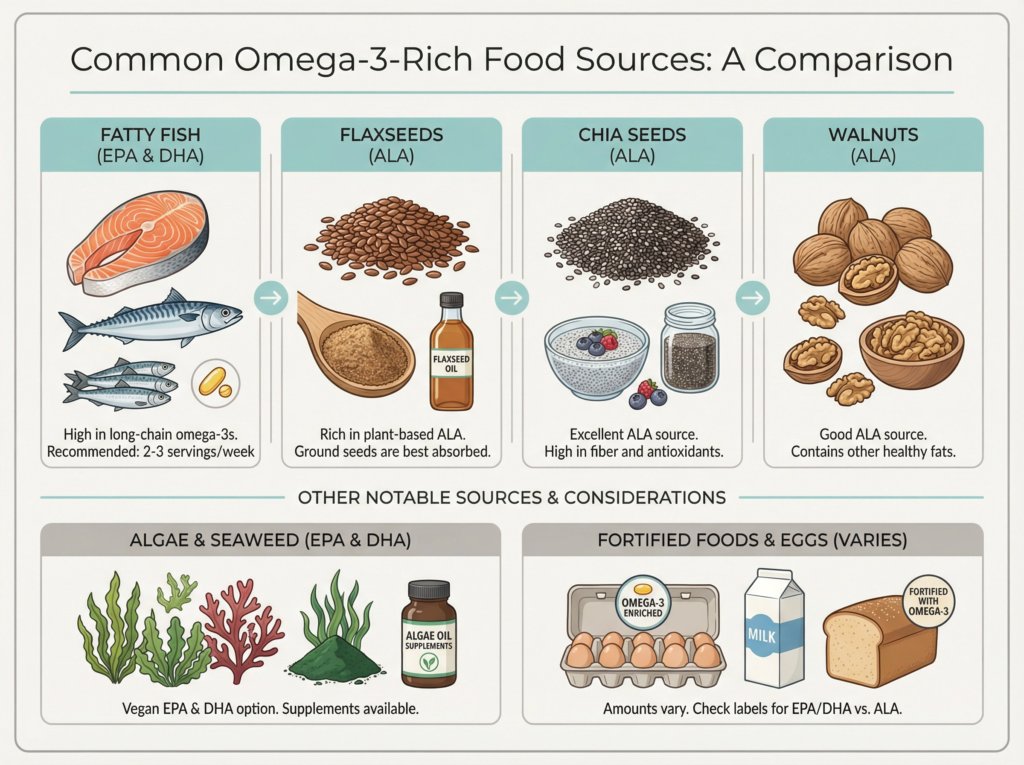
    Chart comparing common omega-3 food sources including fish, flaxseeds, chia seeds, and walnuts
    Different omega-3 food sources provide different forms of fatty acids, which is why quality and context matter.

    If omega-3 levels are low, improvement usually comes from a combination of better intake, better choices, and better follow-through.

    1. Increase omega-3-rich foods

    Depending on your dietary pattern, this may include:

    • oily fish if appropriate for your diet
    • flaxseed
    • chia seeds
    • walnuts
    • other omega-3-supportive foods

    2. Pay attention to quality and consistency

    Occasional effort is not the same as meaningful change. Better internal balance often comes from consistency over time.

    3. Consider the overall fat balance

    It is not only about adding omega-3. It can also help to look at whether your diet is overloaded with processed oils and omega-6-heavy foods.

    4. Track progress instead of guessing

    If you make changes, it is helpful to know whether they are actually improving your internal balance. That is another reason testing is valuable.

    Why This Matters for India Specifically

    This topic is especially relevant in India because many people are health-conscious but still may not realize how common fatty acid imbalance can be.

    Vegetarian eating patterns, low seafood intake, modern urban diets, and general nutritional imbalance can all make omega-3 a more important conversation than many people assume.

    And because the symptoms can overlap with stress, poor sleep, and deficiency-related fatigue, low omega-3 may be overlooked for a long time.

    A Better Next Step Than Guessing

    If you suspect omega-3 may be part of the picture, the smartest first step is not random supplementation. It is clarity.

    When you understand your internal balance more clearly, you can make better decisions about what your body may need and how to track progress over time.

    That is especially true for something like omega-3, where the difference between “probably low” and “measured and confirmed” matters.

    Stop guessing about your omega-3 levels. Take the BalanceTest and get a clear picture of what your body actually needs.

    Disclaimer: This content is for educational and informational purposes only and is not intended as medical advice. This product is not intended to diagnose, treat, cure, or prevent any disease. Always consult your doctor or a qualified healthcare professional before making any health decisions or starting new health regimens.

    Disclosure: I am an Independent Partner of Zinzino. This site is educational in nature and not endorsed by or affiliated with Zinzino.
  • How to Interpret Your Health Test Results: A Beginner’s Guide

    Person reviewing health test results with a wellness consultant
    Interpreting results becomes easier when you look at patterns, context, and next steps rather than numbers alone.

    Your test results are back. Now what?

    For many people, this is the moment confusion begins. You may have numbers, abbreviations, ranges, arrows, and comments—but no real sense of what any of it means in everyday life. One result looks low. Another looks “normal.” A third is close to the edge of the range. Should you worry? Ignore it? Retest? Change your diet? Ask for more testing?

    This confusion is common, and it is one reason so many people end up depending on random internet advice, fragmented social media content, or generalized recommendations that do not really apply to them.

    A better approach starts with understanding what health markers are, what they can tell you, and how to think about results in a calm, practical way.This article is a beginner’s guide to interpreting health markers so you can move from confusion to clarity.

    Why Health Markers Matter

    Health markers are measurable indicators that help describe what is happening inside your body. They do not tell the entire story on their own, but they can provide useful clues about your current internal state.

    That matters because how you feel is only one part of the picture.

    A person may feel tired, foggy, run-down, irritable, sluggish, or “off” for months before understanding what may be contributing to those symptoms. In some cases, internal markers can point toward nutritional gaps, metabolic patterns, recovery issues, or general imbalance long before someone knows exactly what to pay attention to.

    This is why testing can be valuable. It moves the conversation from:

    • “I think something is wrong”

    to:

    • “These are the markers I should understand more clearly.”

    The goal is not fear. It is informed action.

    Common Health Markers Explained

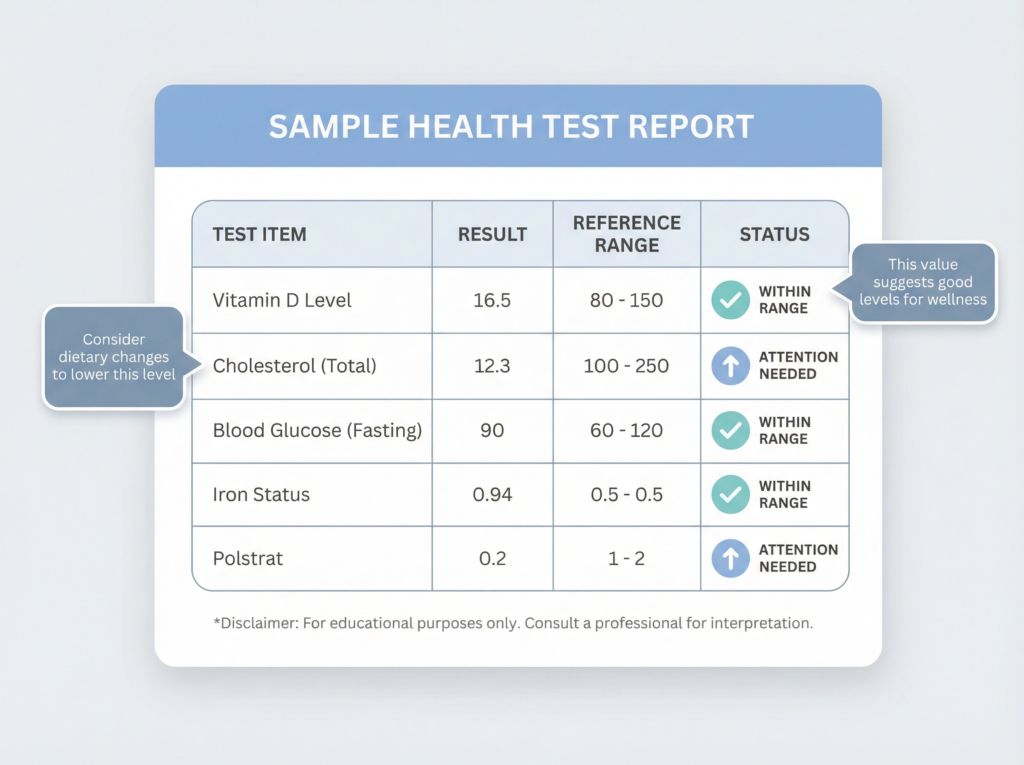
    Sample health test report with simple educational annotations and result ranges
    Test results are most useful when they are interpreted in context, not just read as isolated numbers.

    Different tests look at different systems. You do not need to memorize everything, but it helps to understand the categories.

    Blood sugar and glucose-related markers

    These markers help show how your body handles sugar and energy.

    When blood sugar is unstable, people often notice symptoms like fatigue and energy crashes before they understand what may be driving them.

    They can provide clues about:

    • short-term blood sugar levels
    • longer-term glucose control
    • possible insulin resistance or metabolic stress
    • whether your energy crashes may be connected to blood sugar instability

    Cholesterol and lipid markers

    These help describe aspects of cardiovascular and metabolic health.

    People often focus only on whether cholesterol is “high” or “low,” but the more useful question is what the overall pattern suggests and how it fits with lifestyle, family history, systemic stress, nutrition, and general health goals.

    Hemoglobin and iron-related markers

    These are especially relevant when fatigue, weakness, low stamina, or breathlessness are present.

    Low hemoglobin or poor iron status can affect oxygen delivery and leave people feeling tired even when they are trying to rest and eat well.

    Vitamin and nutrient markers

    These may include markers related to:

    • vitamin D
    • vitamin B12
    • folate
    • iron stores
    • other nutrients depending on the test and context

    Low nutrient markers can affect energy, mood, recovery, concentration, and physical performance.

    Hormonal and metabolic balance markers

    Hormonal and metabolic markers can be relevant when someone experiences ongoing fatigue, low mood, sluggishness, or poor concentration. These systems influence how the body produces and uses energy, which means that when internal balance is off, the effects can show up in quiet, gradual ways that are easy to overlook. Looking at these markers in context, alongside other results and symptoms, can give a more complete picture of what may need support.

    Cellular Stress and Recovery markers

    Some tests may give clues about systemic stress or recovery patterns within the body. These are usually interpreted in context rather than in isolation.

    Normal Ranges vs. Optimal Function

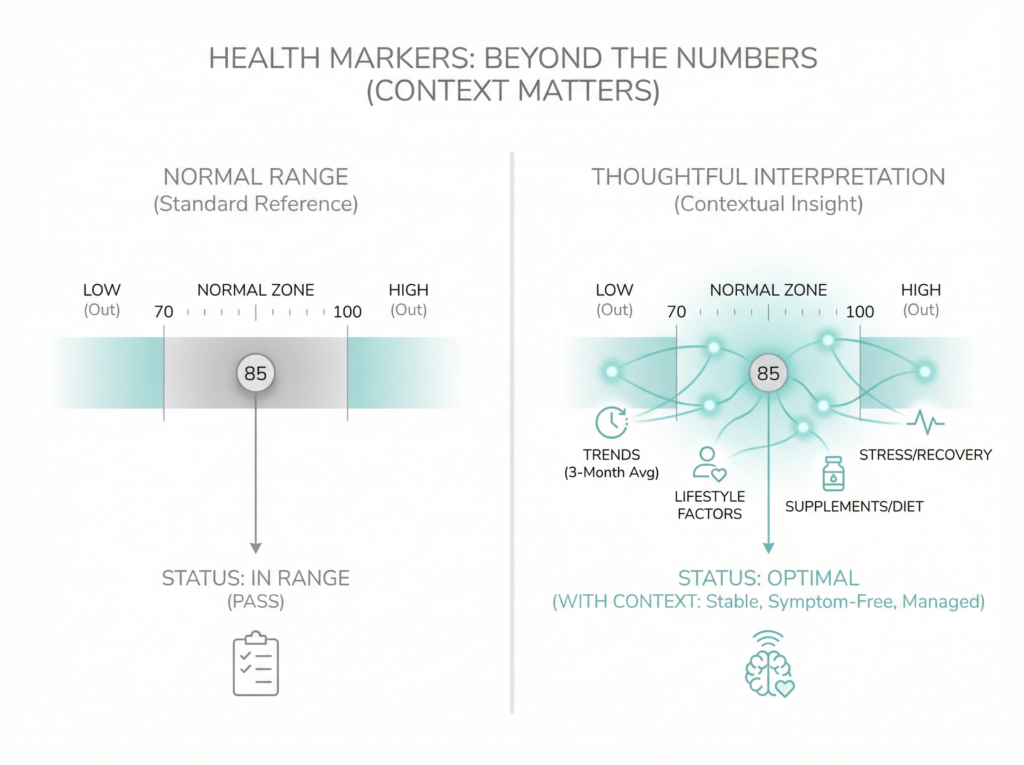
    Chart comparing normal range with thoughtful interpretation of health markers in context
    A result within range does not always tell the full story without context, symptoms, and lifestyle patterns.

    One of the biggest sources of confusion is the word normal.

    A result can fall inside a standard reference range and still leave a person wondering why they do not feel well. On the other hand, a result slightly outside a range does not always mean something dangerous is happening.

    That is why interpretation requires context.

    A range is not the whole story

    Reference ranges are general tools. They help identify values that are common in a large population, but they are not the same as a personalized wellness interpretation.

    What matters includes:

    • the full pattern of results
    • whether symptoms match the marker pattern
    • whether multiple markers point in the same direction
    • how long a pattern has been present
    • whether your lifestyle or nutrition may be influencing the result

    Think in patterns, not isolated numbers

    A single number rarely explains everything.

    For example:

    • low energy plus low B12 may be more meaningful than low B12 alone
    • poor recovery plus low vitamin D may tell a clearer story than either one by itself
    • fatigue plus low hemoglobin plus low iron stores is a different picture than a single borderline result

    Interpreting your results well means asking:

    • what does this marker suggest?
    • how does it connect to my symptoms?
    • what else should be looked at alongside it?

    When to Worry and When Not to Panic

    Many people make one of two mistakes when reading health results:

    1. they panic too quickly
    2. they ignore everything completely

    A better approach is somewhere in the middle.

    Do not panic over one unfamiliar result

    A result may appear unusual for many reasons, including timing, hydration, recent illness, stress, sleep disruption, lab variation, or the need to interpret it alongside other markers.

    But do not dismiss persistent patterns

    If a marker is clearly low, clearly high, or repeatedly abnormal—and it matches how you feel—it deserves attention. The same is true when several results together suggest the same underlying issue.

    Ask better questions

    When reviewing your results, ask:

    • what system does this marker relate to?
    • is this likely connected to how I feel?
    • what should be interpreted together with it?
    • do I need follow-up with a healthcare professional?
    • what lifestyle or nutrition factors could be relevant?

    These questions are more useful than simply asking whether a result is “bad.”

    A Beginner’s Way to Interpret Results Step by Step

    If you are looking at a report and feeling overwhelmed, here is a simple way to approach it.

    Step 1: Start with your symptoms

    Think about what you are actually experiencing.

    Examples:

    • low energy
    • brain fog
    • poor sleep
    • slow recovery
    • mood changes
    • digestive discomfort
    • cravings
    • persistent low stamina

    Your symptoms do not replace professional testing, but they help you interpret whether a result is relevant to how you actually feel.

    Step 2: Group your markers by category

    Instead of looking at random values one by one, group them by area:

    • energy-related
    • metabolic
    • cardiovascular
    • nutrient-related
    • hormonal or metabolic imbalance-related
    • cellular balance-related

    This makes the report easier to understand.

    Step 3: Look for patterns

    Do several values point in the same direction?

    For example:

    • fatigue + low iron markers
    • sluggishness + signs of hormonal or metabolic imbalance
    • low mood + low vitamin D or B12
    • post-meal crashes + glucose-related issues

    Patterns are often more meaningful than isolated numbers.

    Step 4: Compare symptoms with markers

    Not every low or high result explains what you are feeling. But when results and symptoms line up, that gives you a more useful starting point.

    Step 5: Decide what the next step should be

    That may include:

    • follow-up with a qualified healthcare professional
    • more testing
    • retesting after a period of lifestyle change
    • changes to nutrition, sleep, stress management, or recovery habits

    Why Interpretation Matters More Than Guessing

    Many wellness decisions are made without enough information.

    People often start supplements, diets, routines, or “detox” plans based on symptoms alone. That can feel proactive, but it is not always efficient.

    If you do not understand your internal markers, it is easy to:

    • focus on the wrong issue
    • miss something important
    • overreact to one result
    • underreact to a clear pattern
    • spend time and money on solutions that do not fit your situation

    A more informed approach starts with interpretation.

    Testing is valuable because it gives you something concrete to work with. Interpretation is what makes that information useful.

    The Role of Internal Balance

    This is where internal balance becomes important.

    Internal balance refers to how well key systems and markers are functioning together. It is not about perfection. It is about whether the internal conditions that support energy, recovery, metabolism, and resilience are where they should be.

    When your results show imbalances, that does not automatically mean something is seriously wrong. But it may mean your body needs more support than symptoms alone are revealing.

    That is why testing-based wellness can be more helpful than generalized advice. It helps you personalize your next step.

    What to Do After You Get Your Results

    Once you understand your results better, the goal is not to become obsessed with numbers. The goal is to use them wisely.

    Practical next steps may include:

    • asking informed follow-up questions
    • discussing concerning results with a qualified healthcare provider
    • improving nutrition quality
    • reviewing sleep, stress, and recovery habits
    • considering whether additional testing would be useful
    • retesting after a period of targeted changes

    In many cases, the best next step is not a dramatic reset. It is a more precise one.

    A Better Relationship With Your Health Data

    If you have ever looked at a test result and felt more confused than informed, you are not alone.

    The good news is that interpretation gets easier when you stop expecting one number to explain everything and start looking at the bigger picture. Health markers are not there to make you anxious. They are there to help you understand what may need attention.

    A test-based approach does not remove uncertainty completely, but it gives you a more grounded starting point than guessing.

    If you want a clearer picture of what your internal health markers may be saying, the most useful next step is to begin with a structured self-check and a more informed framework.

    Ready to stop feeling confused by your test results? Take the BalanceTest and get a clear, personalized picture of your internal health.

    Disclaimer: This content is for educational and informational purposes only and is not intended as medical advice. This product is not intended to diagnose, treat, cure, or prevent any disease. Always consult your doctor or a qualified healthcare professional before making any health decisions or starting new health regimens.

    Disclosure: I am an Independent Partner of Zinzino. This site is educational in nature and not endorsed by or affiliated with Zinzino.